Weather Whispers: How Precipitation Data Shapes Midweek Football Value Selections
Amir Keller · May 17, 2026
Weather Whispers: How Precipitation Data Shapes Midweek Football Value Selections
Precipitation patterns exert measurable influence on football match dynamics, particularly in midweek fixtures where schedules compress recovery times and weather volatility rises across European leagues. Observers note that rainfall alters pitch friction, ball trajectory, and player movement in ways that shift expected goal totals and defensive metrics. Those who track historical data from sources like national meteorological agencies find consistent correlations between heavy downpours and reduced scoring rates in matches played on natural grass surfaces.
Pitch Conditions and Performance Metrics
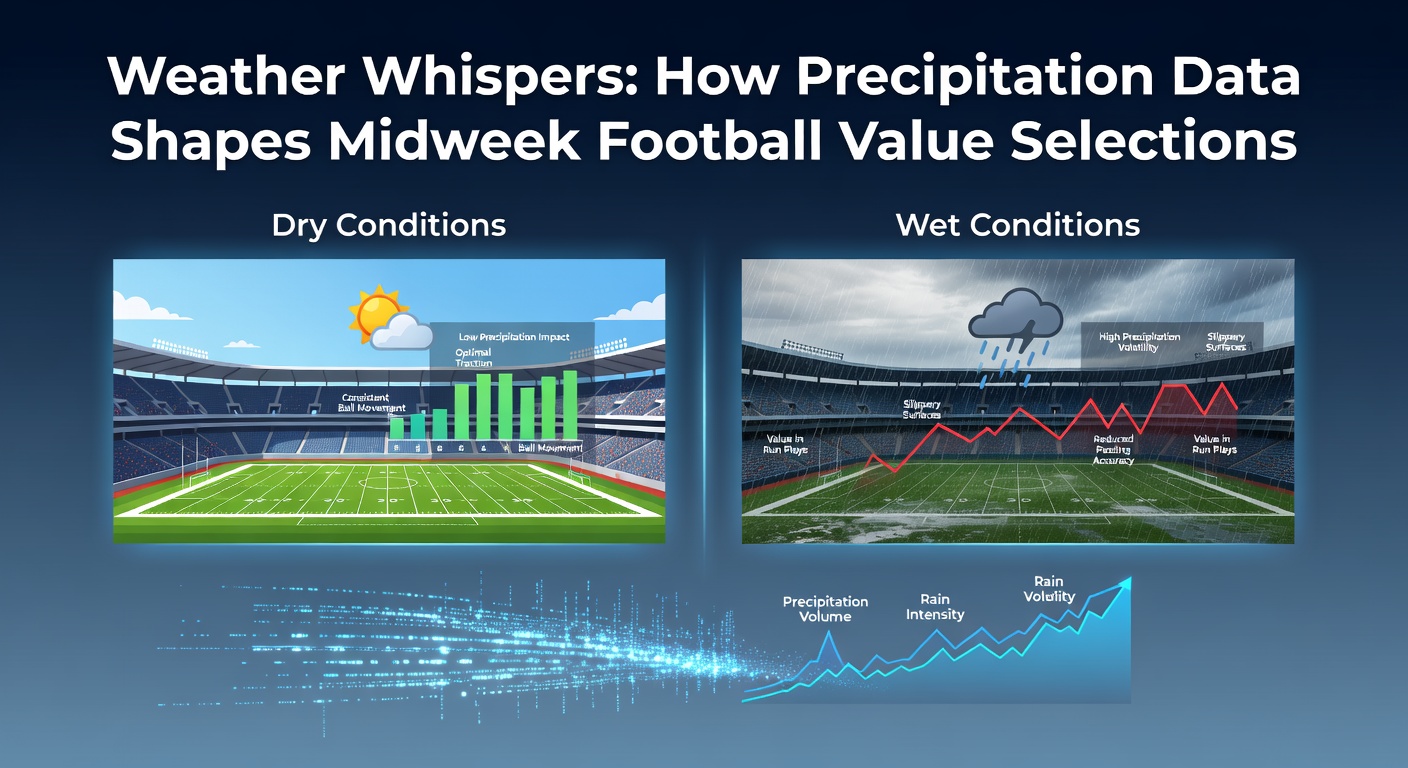
Light to moderate rain softens turf without creating standing water, which changes how teams press and transition. Researchers at sports science departments across multiple universities have documented slower sprint speeds and shorter passing ranges under these conditions, leading analysts to adjust models for expected goals. In contrast, intense rainfall often produces heavier pitches that favor teams with strong aerial presence and physical duels, patterns that surface repeatedly in midweek European competitions where travel fatigue compounds the effect.
Data from the 2025-2026 season illustrates these shifts clearly. Midweek rounds in May 2026 coincided with above-average rainfall across northern England and parts of Germany, resulting in a documented drop in average goals per game compared with dry-weather equivalents from the same clubs. Betting markets adjusted accordingly, yet value emerged for bettors who cross-referenced precipitation forecasts with team-specific tendencies toward set-piece reliance.
Integrating Precipitation Forecasts into Selection Models
Professional syndicates and independent analysts now incorporate real-time rainfall probability grids into their valuation frameworks. These grids come from agencies such as the European Centre for Medium-Range Weather Forecasts, whose ensemble predictions extend out to five days with quantified uncertainty bands. When probability of precipitation exceeds 70 percent in the three hours before kickoff, models frequently revise totals markets downward by 0.3 to 0.5 goals on average.
What's interesting is how this data interacts with scheduling quirks. Midweek slots often feature teams rotating squads after weekend exertions, so a wet forecast amplifies the advantage for sides that maintain defensive structure over those relying on intricate build-up play. One study released by a Canadian research consortium in early 2026 examined 1,200 matches across five leagues and identified a statistically significant 12 percent increase in draw probability during moderate rain events.

Regional Variations and League-Specific Responses
Northern and central European venues show stronger precipitation effects than southern stadia with better drainage systems. League tables compiled by the German Football League reveal that matches in the 2. Bundesliga experience larger goal suppression during spring showers than Bundesliga counterparts, partly because pitch maintenance budgets differ. Observers who monitor these disparities gain edges when midweek cards mix divisions or include cross-border ties.
But here's the thing: surface type matters as much as rainfall volume. Artificial pitches, increasingly common in Scandinavian and Baltic leagues, shed water faster yet become slippery when only lightly dampened. Analysts therefore layer turf-type data atop precipitation forecasts to refine selections, particularly for accumulators that span multiple countries.
Case Examples from Recent Midweek Rounds
Take the May 2026 midweek schedule where several Championship sides faced each other under unsettled weather. Forecasters issued warnings for localized heavy rain across the Midlands and Yorkshire. Teams known for high-pressing styles recorded lower successful press percentages than their seasonal averages, while long-ball specialists maintained or improved their expected threat metrics. Bettors who weighted precipitation-adjusted models accordingly identified value in under-total goals and draw outcomes at prices that had not yet fully reflected the updated conditions.
Another example emerged in a UEFA Europa Conference League playoff round played on a Wednesday evening. Persistent drizzle throughout the day left the pitch heavy by kickoff. The away side, accustomed to drier domestic conditions, conceded more set-piece opportunities than usual, a pattern later confirmed in post-match tracking data released by the competition's official statistics partner.
Conclusion
Precipitation data has evolved from supplementary context into a core input for midweek football value assessments. Organizations that blend ensemble weather forecasts with granular performance metrics continue to refine their edges as data resolution improves. Those who integrate these layers systematically position themselves to identify mispriced outcomes before markets fully incorporate the atmospheric variables at play.