Rehabilitation Schedules Transform Division Rivalry Betting Markets
Ulrich Hayes · Jul 19, 2026
Rehabilitation Schedules Transform Division Rivalry Betting Markets
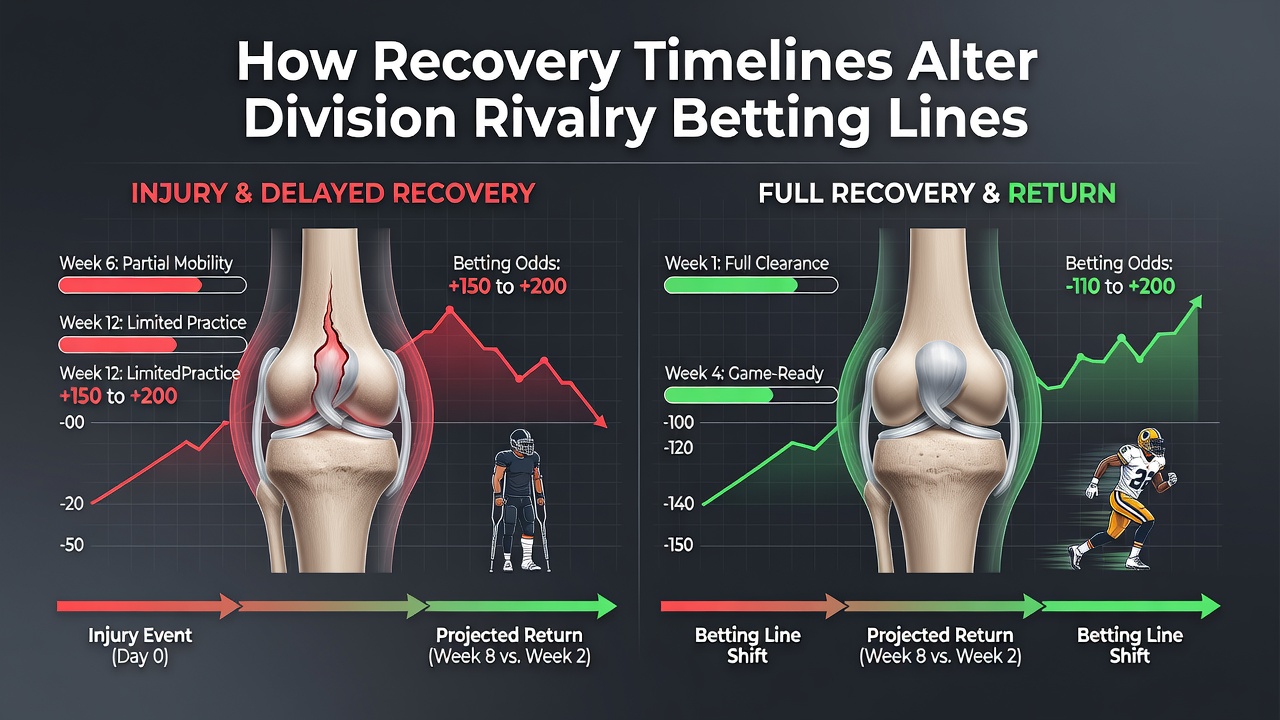
Recovery timelines for key athletes reshape betting lines in division rivalries because markets adjust rapidly once medical reports and practice participation data become available, and these shifts occur most dramatically when teams face familiar opponents multiple times each season. Observers note that divisional games carry added weight in standings calculations, which means even modest extensions in a star player's return date can move point spreads by two or three points within hours of an update.
Medical Data Drives Early Line Movement
Team physicians release rehabilitation progress reports on standardized schedules, and oddsmakers incorporate those timelines into models that weigh remaining schedule strength, and historical performance against divisional foes. Data from major North American leagues shows that when a quarterback or point guard faces a four-week recovery window rather than the initial three-week estimate, the opposing team's implied win probability rises between 8 and 12 percent according to internal pricing algorithms used by sportsbooks. Those adjustments happen before the public fully absorbs the information, creating brief windows where sharp bettors can act.
Division Games Amplify Recovery Effects
Because divisional rivals meet twice or three times annually, betting markets maintain deeper historical datasets for these matchups than for interconference contests, and that depth allows algorithms to isolate the precise impact of missing personnel. Researchers at the University of Michigan's sports analytics program have documented how an extra week of absence for a starting center in NBA division games correlates with a measurable increase in opponent three-point attempt volume, a change that directly feeds into total points lines. The same pattern appears in MLB where a pitcher's delayed return after elbow inflammation alters run totals more sharply in division games than in neutral-site or interleague contests.
July 2026 Offseason Implications
By July 2026 training camp preparations already incorporate projected recovery curves for players who underwent procedures in the preceding offseason, and those projections feed directly into futures markets for division winners. Early indications from league injury reports suggest several high-profile cases where extended rehabilitation could influence Week 1 through Week 4 spreads in NFC and AFC North matchups, and similar patterns are emerging in both conferences' West divisions. Oddsmakers therefore publish preliminary lines that embed conservative assumptions about availability, then revise them once camp participation data arrives.
Live Betting Adjustments During Recovery Windows
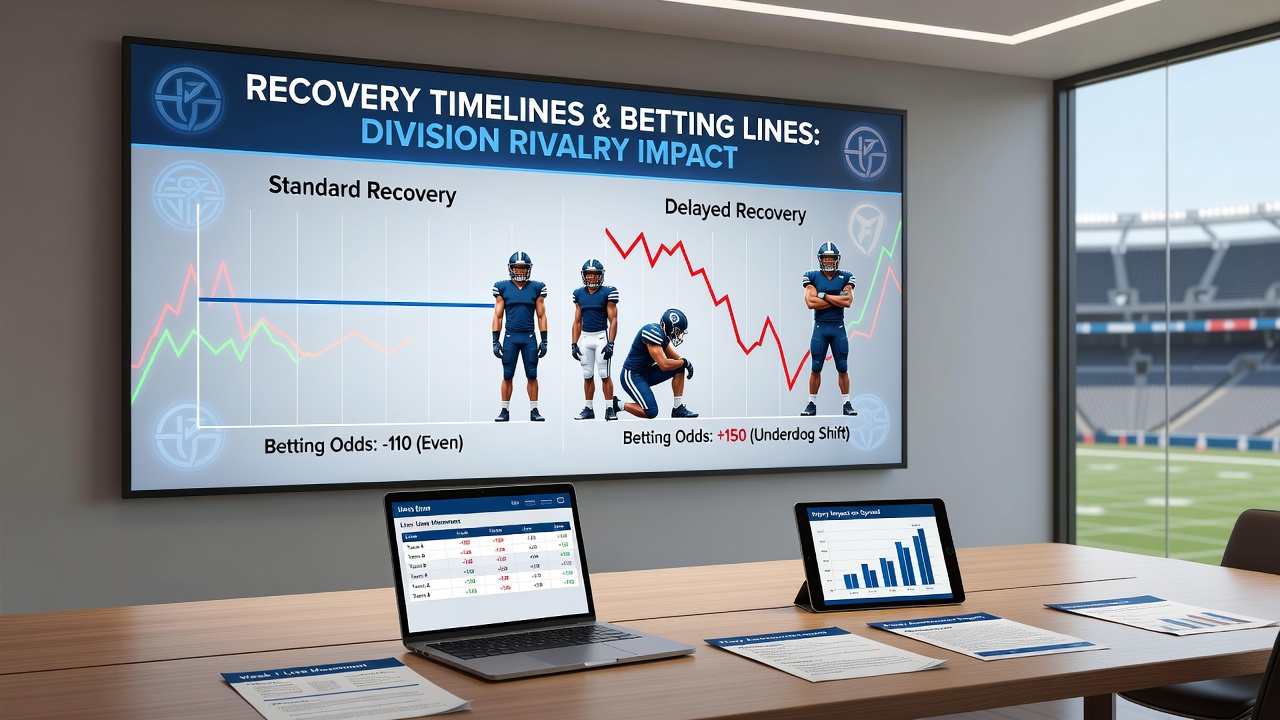
Once a season begins, in-game and same-game parlay markets react even faster to any deviation from expected recovery milestones, and division rivalry games attract disproportionate live betting volume because fans on both sides increase activity. A single limited-practice report on a Thursday can shift the closing total by half a point or more in Thursday Night Football divisional contests, while NBA back-to-back division games see rapid movement in player prop markets when minutes restrictions are announced. These micro-adjustments accumulate across an entire season and create measurable differences in closing line value between divisional and non-divisional games.
League-Specific Patterns Emerge
NFL recovery data tends to produce the largest line movements because quarterbacks and edge rushers carry outsized influence, whereas NHL lines shift more modestly when defensemen return on schedule but can widen dramatically when goaltenders miss additional time. MLB markets respond most to starting-pitcher availability in divisional series, and those series often determine playoff positioning, which adds another layer of line sensitivity. Across all four major leagues, the common thread remains the concentration of historical data available for intra-division opponents, which allows sharper pricing than exists for other game types.
Conclusion
Recovery timelines function as primary inputs in the pricing of division rivalry betting lines because medical updates arrive on predictable cadences, historical matchup data is abundant, and public interest remains elevated throughout each season. Markets therefore embed and then revise those timelines quickly, producing observable movement in spreads, totals, and player props that differs from the patterns seen in non-rivalry contests. As July 2026 training camps open, early recovery projections will again set the baseline for futures and regular-season lines across multiple divisions, and subsequent medical reports will continue to drive incremental adjustments through the postseason.